General News
14 May, 2025
Paul Trotter - farming is in the blood
Paul Trotter is a fourth-generation farmer at Banyena and with his wife Sarah and four young children, faces an uncertain future.
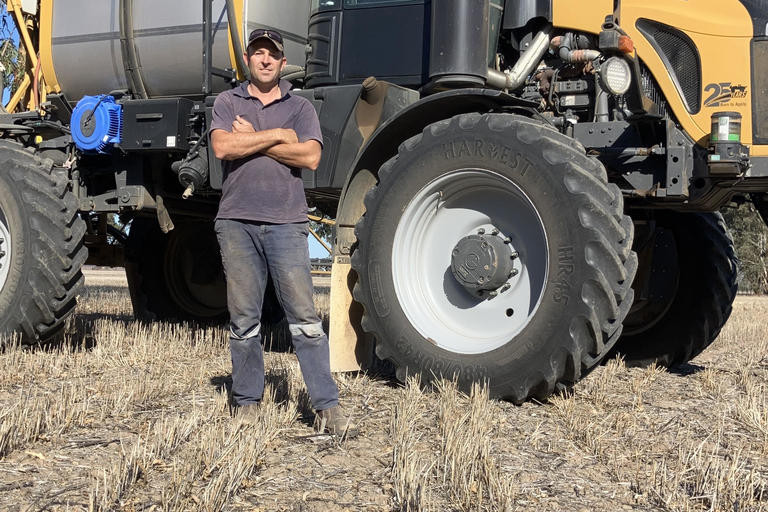
Some of their farming land is inside the Aston Corporation Ltd Donald Mine Project and their home is on the edge of the project so they will lose land and be unable to live in their home due to the noise pollution.
He said, the Donald Mine Project has gained speed in the past 12 months since it received US funding.
"It was bubbling along for a while, but it has moved ahead quickly in the past year," he said.
"We know we won't be able to live in our home for 15 to 20 years if it goes ahead due to the 24 hour noise pollution, they already told us that; we'll have to relocate."
"Our children don't stop growing over those 15-20 years to pick up where they left off before the mine!"
But Paul, like many others like him, do not plan to give up any time soon.
"I have not agreed to any terms with the mine and I don't plan to," he said.
"I am a broad-acre farmer, not a mineral sands miner."
Paul said he is not against mining, but to mine prime agricultural land and to take homes away from families is heartbreaking.
"I had the ideal childhood. I grew up on the farm and would have left school just to be on the farm but I stayed and finished my education and got certificates to say I knew what I had already learned on the farm," he said.
"And I loved every minute of it."
Paul said his four children are the same, with three of them already set on a farming future.
His eldest son is 12 and already manages the farming equipment as well as any one can and like his dad, would leave school any day soon to be on the land.
"I had a farming future but they don't," he said
Those dreams are uncertain now due to the mine.
"This, this is disruptive to everything they know and everything we planned for our family," he said.
Paul said he continues to go to the community meetings about the mine but to date he hasn't seen any proof that his farming land can be rehabilitated for broadcaster farming after the mine's lifetime.
"A farmer doesn't farm for the money, it's deeper than that.
"It's a generational thing, it's passed down and there's this thread linking us to each other; from the past, to the present and to the future."
"We live and breathe it!"
Paul describes the house they live in as a home that was built in good times, with love and a shared history and they [the mine staff] say, "you have to relocate, to where?
"We are not going to the city."
As much as Paul and Sarah try to protect the children from the continual stress they say it isn't possible to stop them from understanding this is a bad thing for them all.
"Mining in every way has been tarnished for our children because of this experience.
"They have seen how we have been treated and the mental anguish it has caused us and our friends and neighbours, and they see it as something that is not good in any way," Paul said.
Paul said he looks at the families around him and sees what will be the disintegration of the community they have built and enjoy.
"If they force us out and we relocate, the community doesn't just lose a family. They lose kids from the football and netball teams and Sarah volunteers with the ambos and if you multiply that by the number of families affected, all you have left is a ghost town."
Paul said he wants people to understand that if mining takes over agricultural land, which is a minimal percentage of the Australian land mass, we'll become reliant on other countries to feed us.
"People need to understand that Australian produce is the best in the world and it's the lifeline of the country.
"Everything a farmer does, he puts back into our country," he said.
Paul says the governments and corporate companies seem to have forgoten about food production and don't give farmers credit for it either.
In a plea to the community, he said, "Please get behind your farmers!"